It is my pleasure to present my fourteenth annual report as Manager for Rotary Australia Repurposing Equipment (RARE) Central Region for the 2023-24 year. This year has been slightly less challenging than previous years with the Covid19 pandemic having slightly less effect, although availability and cost of shipping still has some impact on operations.
Summary of Activities
The above components are discussed in detail below, but first, some summary statistics:
Container projects completed: 7.
Destinations: Sierra Leone, Uganda, Zimbabwe, Timor Leste, Philippines, Sri Lanka and Liberia.
Standard containers shipped: 13 (20 foot equivalents)
Value of goods shipped: A$ 772,000
Other international projects assisted: 16, including Ukraine, PNG, Greece, Zimbabwe, Senegal, Sierra Leone, Congo, Ghana, Lesotho, Samoa and Burundi.
Local bodies assisted: 53
Donations collected: 239 Donations in progress: 37
Donations not collected: 25 Donations forwarded to Other Charities: 10
Value of donations picked up by Rotarians: $16, 400
Club/district presentations: 4 Club working bees (at warehouse): 5
Logged volunteer hours: 3104 Total value of volunteering: $118,574
In summary, we continue to take steps to achieve our strategic goals. We have continued to reduce stock levels with the scrapping of obsolete, damaged or unserviceable stocks, and having a general cleanup of the warehouse facility. Donations continue to be assessed prior to collection to minimise cost and effort and to focus on goods needed to service requests of needy communities. Financially RARE Central is in a sound position. Sufficient funds were provided for all container projects. Donations, sale of goods and scrap metal covered operating expenses for the year. More details are contained in the following sections, set out under our strategic outcome headings.
Effective System of Collecting Goods
A total of 239 donations were collected during the year, with another 37 yet to be assessed/collected. Another 25 were declined and 10 were offered to other charities. This equates to 6 donations to manage each week. Donations varied in size from multiple truckloads to individual boxes. The major donation of 7 dental vans from SA Dental involved considerable effort, including registration with RAWCS. We have been in discussion with 16 different groups who have expressed interest in the vans, some overseas and some within Australia. To date 6 vans have been allocated and 3 have left our warehouse facility.
The generosity of donors does challenge us in coordinating assessments and collecting goods. We have continued to ensure that goods are assessed prior to collection to minimise wasted effort in collection as well as disposal of unusable goods.
On 24 occasions, we have had donors deliver their donations which greatly helps. Otherwise we have continued to call on Rotarians to assist in collecting donations on 215 occasions, involving 545 volunteer hours and saving approximately $16, 650 in collection costs. We thank all those who have assisted in this endeavour. A hire truck was utilised on 10 occasions.
I would like to thank the Rotary Club of Largs Bay for their ongoing support in collecting wheelchairs, repairing the chairs and then delivering them to our warehouse. The time, effort and cost of replacement tyres is very substantial and we are most appreciative of their involvement in this over past decades.
Goods are Stored Ready for Shipping
Major effort continues to reduce excess stock levels at the warehouse facility. Substantial amounts of goods have been sold or scrapped which has reduced the clutter within each building as well as the volume of goods outside. Scrap metal netted $1925 in revenue during the year with metal prices a little better compared to previous years.
Rationalisation of electronic medical/dental equipment has been possible with the invaluable assistance of medically/technically trained volunteers.
We continue to work collaboratively with RC Mt Barker with their Repurposing Playgrounds project. A shed and additional space has been allocated for that. Many of these have been sent overseas (Timor Leste and Philippines) during the year which has tidied the facility considerably. One playground was still within Australia Standards and we were able to get this to an Aboriginal school in Alice Springs.
Promotion and Liaison Protocols
The pandemic continued to limited presentations being given to clubs – only 3 this year. The District working bee/RAWCS Open Day in November 2023 at the warehouse was a significant opportunity to meet many Rotarians in person and promote the RARE operation. Otherwise liaison and promotion to Rotarians and others has largely been through their attendance at the warehouse with working bees and container loading days. 8 clubs and other organisations were involved in these activities.
The RARE Facebook site continues to be regularly populated and is another significant avenue of disseminating information about RARE activities.
The RAWCS Board changed the name of Donations in Kind (DIK) to Rotary Australia Repurposing Equipment (RARE) in 2023. This has necessitated education of our donors, sponsors and Rotary clubs. New signage of the buildings and road signs was installed in July 2023.
Effective Shipping System
Global shipping was greatly impacted by the COVID-19 pandemic. However, during the year, shipping availability and cost continued to return to levels similar to pre-COVID time. Seven container projects were completed during the year, to usual target areas: Africa and SE Asia.
Goods, mainly medical, have also been provided to individuals and organisations to go overseas in projects outside RARE. Destinations include Ukraine, PNG, Greece, Zimbabwe, Senegal, Sierra Leone, Congo, Ghana, Lesotho, Samoa and Burundi.
We have again supported many other Rotary clubs, other organisations and individuals locally and nationally with the supply of domiciliary and medical equipment, furniture and other items that has assisted needy individuals. Some 53 instances of this aid have occurred this year from RARE. We have developed a partnership with the Playford Community Fund, a local organisation that helps needy folk set up housing for them. Many of the items that we get offered but we can’t really utilise, such as domestic furniture, are often needed by the Fund.
Good Governance
Having a long term lease agreement facilitates us being more able to commit to substantive effort and costs to other site improvements. Work continues on putting coverings over the storage containers on site to provide protection from rain and heat.
Financially, RARE Central Region is in a very sound position. Financial figures for the operations at RARE provided by RAWCS show operating project line (RAWCS Project 54 2013-14) with an opening balance $40, 347.74 and closing balance of $59,307.61.
Cash donations from clubs help to cover the out of pocket expenses running the programme. With the pandemic, most clubs are not as flush with funds as previous years. During the year we have received cash donations from four Rotary clubs totalling $7199. A budget of $7200 pa was provided by RAWCS for administration expenses for the RARE Central operation. Of that, $7035 was expended within the timeframe.
Costs for waste disposal continues to be minimised through a variety of measures. The regular weekly kerbside collection, along with free Council vouchers for hard waste disposal, have reduced our waste costs to effectively zero. Monies received from scrap metal totalled $1925 for the year.
With RARE – Central Region’s Work Health and Safety Management System in place and implemented there has been no injury claims or reportable incidents again this Rotary year.
Sustainability of Operations
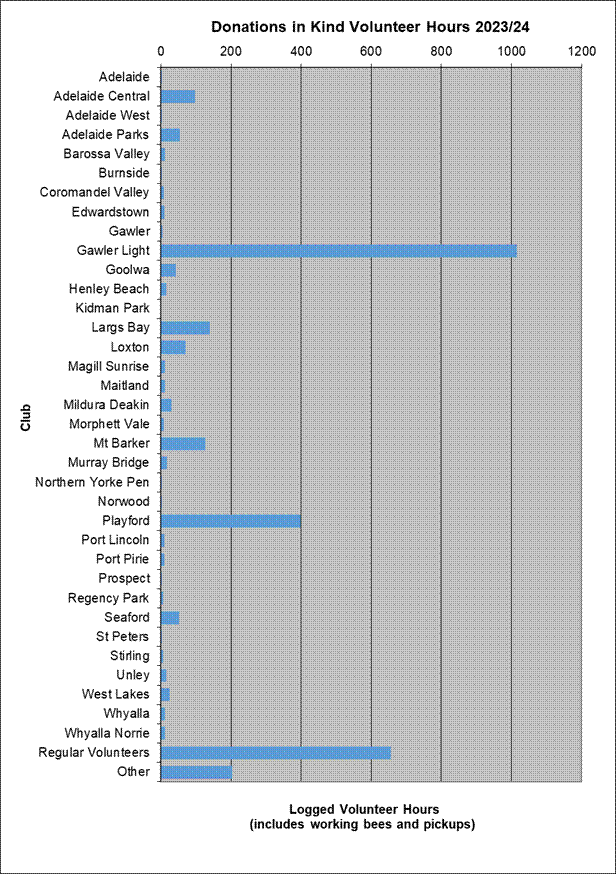
A log-in process is in place at the warehouse facility for volunteers. For 2023-24, the tally of hours of RARE (Central) volunteering totals 3104 hours. This includes an estimated 100 hours of time in collection of goods from donors by Rotarians but does not include the hours that the Rotary Club of Largs Bay put in repairing wheelchairs. The commitment of these volunteers to this work over so many years is quite extraordinary. A summary of volunteer hours by club is included below. The RARE committee input substantial time and effort which is not recognised fully in these attendance sheets.
The support provided by clubs during working bees is a vital part of keeping our head above water in terms of physical management of goods on-site. Unfortunately, we have not had as many working bees at the warehouse facility from clubs this year compared to previous years. The RARE project is arguably one of the most dynamic programmes of Rotary in District 9510.
Conclusion
This year has been another productive year in the life of RARE Central. It has promoted the Rotary brand, highlighting the trust that the community has with Rotary. It has also showcased RAWCS and RARE capacity to undertake complex high-volume projects in a timely manner delivering humanitarian aid across the world.
Even with the demand on resources and volunteers during the year, all this has been done safely and effectively with again no injuries to report. The RARE Central Committee and regular volunteers are to be commended on outstanding performance, persistence and dedication. I am happy to report that we have two new members joining our committee but unfortunately say farewell to two others who have other commitments. I would also like to thank all other volunteers and supporting Rotary clubs who have assisted us in our RARE operations. We would not have been able to achieve what we have without this physical and financial support.
We continue to provide valued humanitarian service to a great many needy communities throughout the world and aim to continue this service in the future both internationally and locally. We also provide a valuable environmental service in reducing landfill by utilising otherwise serviceable goods to those less fortunate.
I look forward to another year at the helm of RARE and our further improvement of RARE operations and ongoing humanitarian service.
Dave Cockshell
Rotary Australia Repurposing Equipment, Central Region
Manager, July 2024